What Is Embodied Carbon in Concrete — and Why Does It Matter?

The construction industry is getting serious about carbon. You’ve probably heard the term ‘embodied carbon’ come up more in project briefs, sustainability reports, and client conversations — but what does it actually mean, and what can you do about it?
Here’s a straightforward explanation — with a focus on concrete, one of the biggest carbon levers on any construction project.
What Is Embodied Carbon?
Embodied carbon is the greenhouse gas emissions — mainly CO₂ — produced by materials and construction processes before a building is even occupied. It’s everything that happens upstream: extracting raw materials, manufacturing products, and transporting them to site.
This is different from operational carbon, which covers the emissions from running a building (energy, heating, cooling). As buildings become more energy efficient, embodied carbon makes up a growing share of a project’s total emissions — in some cases over 50% of its lifetime carbon footprint.
Why Is Concrete Such a Big Contributor?
Concrete is the second most-used material on earth. The volume used in construction means its footprint adds up fast — and the main culprit is Portland cement, the binding agent in every mix.
Producing cement requires heating limestone to extreme temperatures, releasing CO₂ both from the fuel burned and from the chemical reaction itself. For every tonne of cement produced, roughly a tonne of CO₂ is released. On a large project, the concrete specification alone can account for 30–50% of total upfront embodied carbon — making it one of the most impactful places to act.
How Do You Reduce It?
The most effective approach is reducing the amount of Portland cement in the mix by replacing it with supplementary cementitious materials (SCMs) — recycled industrial by-products that would otherwise go to waste:
- Fly ash — a by-product of coal-fired power generation. Can replace 20–40% of cement, reducing carbon while improving workability and long-term durability.
- Blast furnace slag (GGBFS) — a by-product of steel production. Can replace even higher proportions of cement, producing denser, more durable concrete with significantly lower embodied carbon.
- Optimised mix design — specifying only the strength grade your project actually needs, and using mix designs engineered for efficiency rather than over-engineering.
Embodied carbon reductions are verified and documented through Environmental Product Declarations (EPDs) — independently verified documents that declare a product’s full environmental footprint. These are now required under Green Star Buildings v1.1 and increasingly expected on major project specifications.
How BlueStar Addresses Embodied Carbon
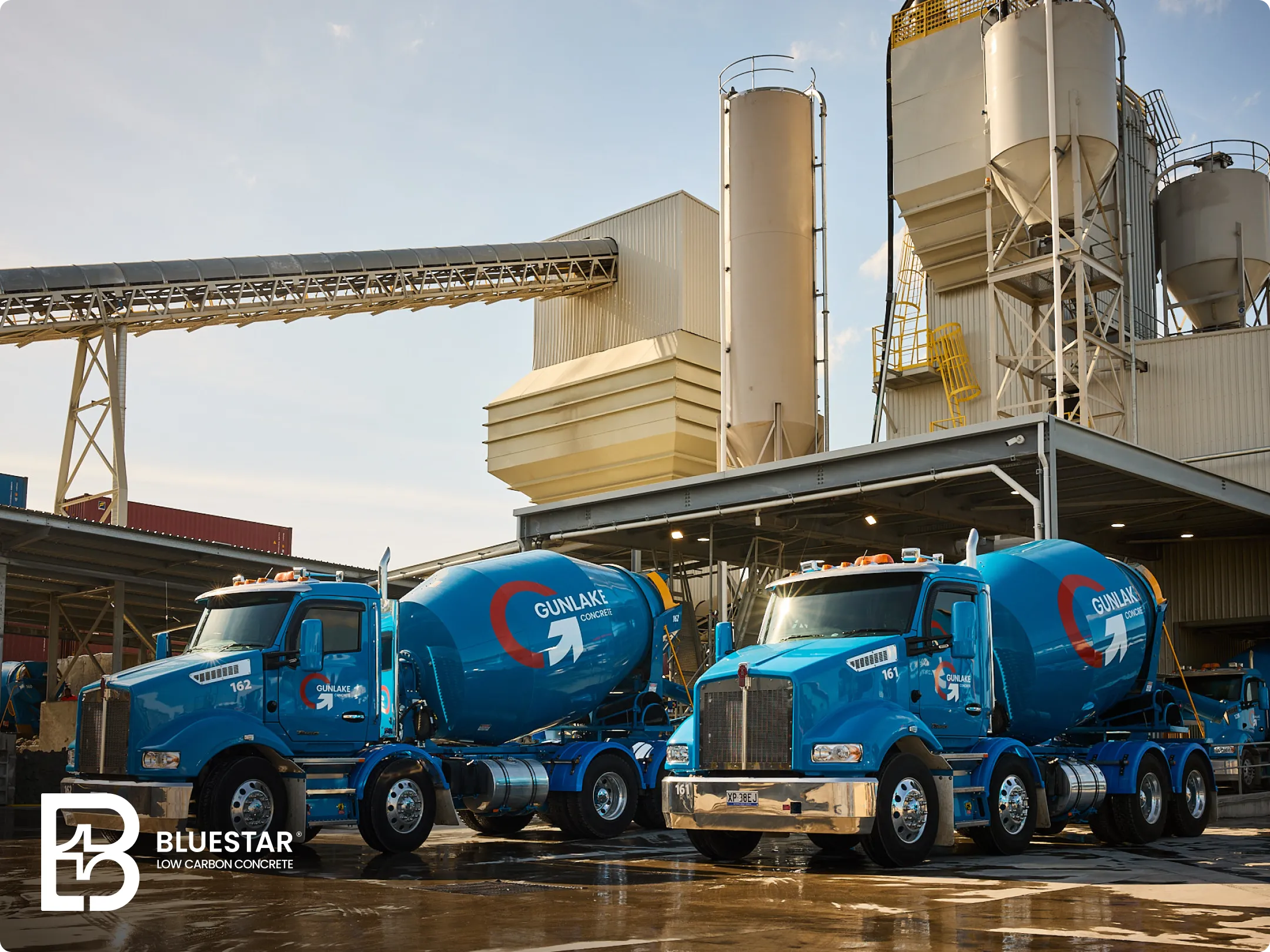
Gunlake’s BlueStar range is purpose-built to reduce embodied carbon in concrete — without compromising strength, durability, or workability. It’s available across four tiers to match any project’s sustainability ambitions: “BlueStar low-carbon concrete range“
- BlueStar — up to 30% reduction in embodied carbon. A straightforward switch for any project looking to lower its footprint without changing its specification process.
- BlueStar Plus — 30–50% reduction. Suited to projects with Green Star targets, ESG reporting commitments, or clients with specific sustainability requirements.
- BlueStar Ultra — 50%+ reduction. For the most carbon-conscious projects pushing maximum embodied carbon performance. Currently in development.
- BlueStar Zero — full carbon neutrality via Climate Active-certified offset programs. Available across any mix design for projects targeting net zero or the Green Star 2030 Climate Positive Pathway.
Every BlueStar mix is AS 1379 compliant and backed by product-specific EPDs and life cycle assessments (LCAs) verified through Gunlake’s NATA-accredited G-Lab. The documentation is ready to submit directly into Green Star, NABERS Embodied Carbon, and Scope 3 ESG reporting — no additional calculation work required on your end.
Want to reduce embodied carbon on your next project? Talk to Gunlake’s technical team about the right BlueStar tier for your specification. Call 1300 857 091 or visit gunlake.com.au/contact.